






















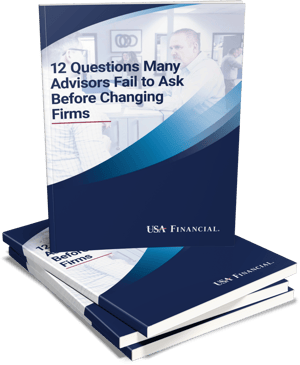
In a moment, we’ll share with you twelve critical questions to ask your new, prospective firm. Whether you are thinking of changing your independent broker-dealer, IMO/FMO, RIA, or TAMP platform, these questions go far beyond what many advisors normally ask.
The typical advisor questions include the “obvious” items:
- Culture. While it may be difficult to discern what the “culture” is like at the company by just asking a few questions, you can usually identify this by talking with other affiliated advisors and/or visiting the firm before making the decision. If the home office culture is one that fits you, that’s a great first start.
- Length of tenure for team members. If employees stick around for a while, then it’s likely that the employer treats their people well. This can also be reassuring that you aren’t working with people with limited experience and knowledge in the firm.
- Regulatory history. This one is simple. Ask about their regulatory history (you can also do the homework yourself these days). Don’t forget that when you saddle up with a broker/dealer or RIA, you’ll likely feel the same regulatory “bumps in the road” that they do. Just ask any rep whose firm caught negative press over the past 5-10 years. Or worse yet, if the firm all of a sudden went out of business.
- Payouts. More often than not, payouts are the first thing an advisor looks for when they are considering making a move. While payouts are important, don’t get caught with your “payout” blinders on as you are making a change. If a firm can help increase your production and make your life easier, it might be worth giving up a percentage or two.
- Costs. You’ll want to make sure you are aware of the costs associated with doing business. Different costs may include E&O insurance, affiliation fees, compliance fees, technology packages, and trading costs. Do your homework in advance so there aren’t any big surprises.
- Average rep. revenue. You’ll want to make sure that you are aligning with a firm that can support the type of representative you are and plan to be in the future.
These are the obvious items that most advisors are prepared to factor in as they consider a new firm. However, in our experience, we’ve seen a number of advisors fail to ask the following (equally as important) questions.
Related Posts
The Hiring Mistake That Can Stall Your Growth
When is the right time to make your next hire? Most advisors wait until they're overwhelmed, client service starts slipping, and their team is already operating at full capacity. In this episode of The Rare Advisor, Aaron Grady explores the difference between reactive hiring and intentional hiring, breaks down the key capacity signals advisors should watch for, and shares a practical framework for evaluating when hiring can unlock growth rather than simply relieve pressure. Learn how to identify bottlenecks, evaluate capacity, understand the economics of hiring, and position your firm for sustainable growth before a staffing crisis occurs.
The Invisible Expertise Problem Most Financial Advisors Face
What happens when a great financial advisor remains virtually invisible outside their current client base? In this episode of the Financial Advisor Marketing Playbook, Mark Mersman sits down with Gabe McManus of Influential Advisor Media to discuss how advisors can transform expertise into influence through books, storytelling, podcast guest appearances, and authority-building content. They explore the role of authentic communication, AI, podcast marketing, personal branding, and the strategies advisors can use to become more visible without turning into full-time influencers.
What's Trending: Three Numbers Defining the September Market Right Now
In this September edition of The Trending Report, Tyler Krzciok breaks down three key numbers shaping today's market environment: the S&P 500's year-to-date return, current Treasury yields, and the trillions of dollars sitting in money market funds. He also examines improving market breadth, what it means when gains begin spreading beyond a handful of large technology companies, and why investors should separate market signals from seasonal headlines. Plus, Tyler tackles the so-called "September Effect" and explains why disciplined investors should focus on fundamentals rather than calendar-based market fears.