It sets the tone, shapes how prospects engage with your content, and supports your goal of building trust in a low‑pressure, educational environment. If you’ve ever wondered how to get more clients from your seminars without coming across as “salesy”, the folder you hand out is a key part of that process.
Below, we'll walk through the essential contents for a high-impact seminar folder and why each piece included matters for your practice.
The Non-Negotiables
Self‑Evaluation and “Your Process” Form
This piece does more heavy lifting than almost anything else in the folder. As attendees move through your seminar, the self‑evaluation prompts them to think critically about their comfort level on each topic, helping them identify areas where they may need guidance. That internal realization is far more powerful than anything you could tell them from the front of the room.
This form also sets the stage for what happens after the seminar by providing a clear call to action. When a prospect has circled several concern areas and sees a list of available appointment times, booking a meeting becomes a natural next step. Including dates and times you're available, or a simple booking link (or QR code) supports your seminar marketing efforts by making follow‑up both easy and expected.
This form is available to all USA Financial affiliated advisors on our EZ Marketing Builder system.
Biography Page for You and Your Team
Your seminar time is limited, and attendees didn’t come to hear a long verbal résumé. Including your biography in the folder lets guests learn who you are on their own terms. A concise, well‑written bio also gives them context about your experience, your approach, and the people who support your practice. This will help them learn your credentials even as your presentation is helping them get to know your personality and communication styles.
Many advisors underestimate how reassuring it is for attendees to see the faces and names tied to the firm. When prospects feel like they “know” you before you even begin speaking, their level of trust rises. This could have a direct impact on how many appointments you book.
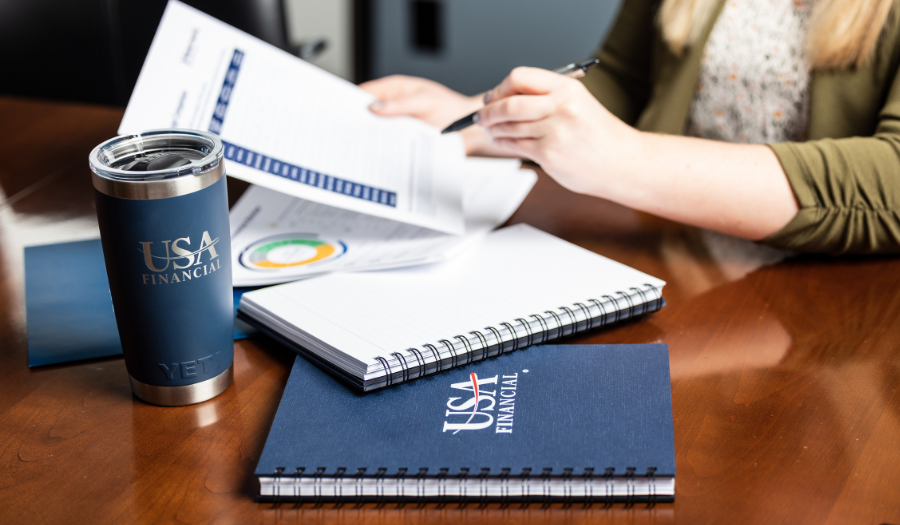
Custom Note Paper and Pen
A simple pad of paper can improve engagement, allowing them to jot down thoughts or questions. It also shows you're thinking of their practical needs. Subtly encouraging them to take notes helps them stay focused and connected to your message. Adding your logo and contact information to the note sheet turns it into a small branding tool they’ll carry home. Simply using your letterhead could work.
It may feel like a minor detail, but in seminar marketing for financial advisors, details matter. Anything that helps prospects stay present and reflect on their needs increases the chances of meaningful conversations afterward.
Advisor‑Written or Advisor‑Featured Articles
If you’ve published articles or been featured in reputable outlets, your seminar folder is the perfect place to showcase that credibility. Prospects appreciate third‑party validation because it reassures them that your expertise is recognized beyond your own marketing materials.
Keep the pieces brief and relevant. You’re not trying to overwhelm them - you’re reinforcing trust through subtle signals of authority.
Optional Add-Ons: Provide Value Without Adding Bulk
Social Security Administration (SSA.gov) FAQs
If you’re running a Social Security seminar, including an SSA.gov FAQ sheet provides valuable clarity. It offers concrete guidance from a trusted source and reminds attendees that the SSA cannot provide personalized advice. That point alone positions you as the professional they’ll want to meet with after the seminar.
Topic‑Specific Fact Sheets (IRS.gov, healthcare, etc.)
For seminars focused on taxes, Medicare, long‑term care, or other specialized areas, a one‑page fact sheet from a third‑party source can reinforce your message. These documents help attendees understand the complexity of the topic and appreciate the value of your guidance. They also help you stay firmly in the educational lane - one of the core best practices in how to get more clients from educational events.
What Not to Include: Protecting Trust Matters
Seminar marketing works best when prospects feel like they’re learning, not being sold to. Crafting a seminar experience that leaves them wanting to learn more about your process and hear about how you work with clients is the goal - that's what helps book follow up appointments. It’s why certain things should never be in your seminar folder.
Product Information or Sales Pieces
Nothing destroys trust faster than handing out product brochures at an educational event. Even if your intentions are good, the message attendees hear is, “This is a sales pitch.” Your seminar should be entirely focused on teaching, clarifying, and guiding. Product conversations have no place in this, and immediate product recommendations without individual conversations are a red flag.
Performance Numbers
Sharing performance data seems like a shortcut to proving your value, but it usually has the opposite effect. Prospects either become skeptical or begin making comparisons you can’t control. You want them to evaluate your approach, not your returns. An old industry rule that speaks to this is "the way a person comes into the relationship is also the way that they'll leave.” Your value isn't in your returns, which can't be promised or guaranteed anyway - it's in your financial planning process.
Pricing or Expenses
Pricing is personal and context‑dependent. Including it in a folder meant for a room full of people invites confusion. These conversations are far more productive one‑on‑one, where you can explain the value behind the numbers. If someone directly asks about this in your seminar, redirect them to individually scheduling a follow up appointment (the information for which should be on your Self Evaluation & Your Process Form).
Bringing It All Together: Why These Materials Work
A well‑organized seminar folder does more than give people something to hold. It shapes their learning experience, reinforces your professionalism, and supports your seminar marketing goals in a way that is subtle but powerful. When prospects have tools to follow along, context to understand who you are, and structured prompts to evaluate their needs, they naturally become more engaged.
That engagement leads to more meaningful conversations, stronger connections, and ultimately more clients.
If you want to dig deeper into the “why” behind seminar folders—how they influence trust, how they support your presentation style, and why they help you get more appointments—make sure to read our companion article: “The Real Purpose of a Seminar Folder.”
The Bigger Picture: How USA Financial Supports You
If you’re feeling inspired to refresh your seminar strategy, you don’t have to do it alone. We've been in the seminar marketing world since 2001, when we launched our Fill-The-Room Event System and we offer guidance on everything from seminar folder best practices to presentation flow and audience engagement.
We also provide annually updated prebuilt presentations on core topics financial advisors enjoy presenting on, like Social Security, Medicare, and tax‑efficient retirement planning. Our team and our strategic partnership is designed to support you through proven strategies and practical tools to strengthen your brand, serve clients well, and grow your practice.
When your seminar materials are aligned with your message and your values, every part of the experience works together—and that’s when seminar marketing becomes one of the most effective ways to get more clients in today’s competitive landscape.